Buying a home or maintaining the one you already own is a major financial commitment, and a surface-level walkthrough simply is not enough to protect that investment. A thorough property inspection digs into the systems and structures that are easy to overlook but expensive to ignore, from the roof down to the ground beneath your yard. Knowing what should actually be checked helps you ask the right questions, avoid costly surprises, and plan for repairs before they become emergencies. This guide breaks down the key areas every inspection should cover so you can walk into your next evaluation informed and prepared.

Roof Condition and Structural Integrity
The roof is one of the most expensive components to replace, so any inspection worth its salt starts here. An inspector should check for missing, curling, or cracked shingles, signs of water intrusion in the attic, and the overall age of the roofing material compared to its expected lifespan. Flashing around chimneys and vents is a common failure point that gets overlooked in a casual walkthrough.
If significant damage or wear is found, it is worth getting quotes from a few roofing companies before finalizing any purchase decision or repair budget. Getting multiple opinions helps you understand whether a patch job will suffice or whether a full replacement is on the horizon.
- Look for granule loss in gutters, which signals shingle deterioration
- Check attic rafters and insulation for water staining
- Note the age of the roof and typical material lifespan
- Inspect flashing around chimneys, skylights, and vent pipes
Exterior Walls and Weatherproofing
The exterior skin of a home does more than provide curb appeal; it protects the structure from moisture, pests, and temperature extremes. An inspector should examine the siding for cracks, warping, or loose panels that could let water seep behind the material and cause hidden rot. Different materials age differently, so wood, vinyl, and fiber cement all require slightly different scrutiny.
Pay attention to caulking around windows and doors, since gaps here often lead to drafts and water damage over time. A well-maintained exterior can save thousands in future repair costs, so this section of the inspection deserves careful attention rather than a quick glance from the curb.
- Check for buckling, cracking, or discoloration in exterior panels
- Look for gaps or missing caulk around window and door frames
- Assess whether trim and fascia boards show signs of rot
- Confirm proper drainage away from the foundation along exterior walls
Heating, Cooling, and Ventilation Systems
A home’s comfort systems represent a significant investment, and their condition can dramatically affect both your budget and your quality of life. An inspector should test the furnace and cooling unit for proper operation, check filters and ductwork, and note the age of major components. Systems nearing the end of their expected lifespan are worth factoring into any negotiation or repair planning.
If the cooling unit struggles to maintain temperature or makes unusual noises during testing, it may be time to call in a professional for air conditioning repair before problems worsen. Catching a failing compressor or refrigerant leak early can prevent a complete system breakdown during the hottest months of the year.
- Test thermostat responsiveness and system cycling
- Inspect ductwork for leaks, disconnections, or excessive dust buildup
- Check the age and maintenance history of the furnace and cooling unit
- Listen for grinding, rattling, or hissing sounds during operation

Plumbing Fixtures and Water Supply Lines
Plumbing problems can be some of the most disruptive and expensive issues a homeowner faces, which is why this system deserves careful examination. An inspector should run water at every fixture, check for adequate pressure, and look under sinks for signs of past or present leaks. Water heater age and condition should also be documented, since replacement can be a significant expense.
When unusual staining, slow drains, or corroded pipes turn up during the walkthrough, bringing in a licensed plumber for a deeper evaluation is a smart next step. A professional assessment can reveal whether the issue is a simple fix or a sign of more extensive pipe deterioration throughout the home.
- Run every faucet and flush every toilet to check function
- Inspect visible pipes for corrosion, rust, or mineral buildup
- Check water heater age, capacity, and signs of leaking
- Test water pressure in showers and sinks throughout the home
Septic and Sewer System Performance
For homes not connected to municipal sewer lines, the septic system is a critical component that often gets overlooked during a standard walkthrough. An inspector should locate the tank and drain field, check for pooling water or odors in the yard, and ask about the maintenance history of the system. A septic system that has not been serviced recently can hide problems that only surface after move-in.
Scheduling septic pumping as part of routine maintenance, or requesting records of the last service, gives buyers and homeowners a clearer picture of the system’s true condition. Neglected tanks can back up unexpectedly, leading to expensive repairs and unpleasant surprises in the yard or basement.
- Ask for maintenance and pumping records from the current owner
- Check the yard for soggy patches or foul odors near the drain field
- Confirm the tank size matches household needs
- Inquire about the age of the system and any past repairs

Porches, Decks, and Outdoor Structures
Outdoor living spaces add value and enjoyment to a property, but they also take a beating from weather and time. An inspector should check for soft or spongy wood, loose railings, and proper attachment to the main structure, since these areas see heavy use and exposure to the elements. Structural connections at the ledger board are especially important to verify, as failures here can be dangerous.
When boards are splitting or support posts show rot, scheduling porch repair sooner rather than later prevents a minor issue from becoming a safety hazard. Small cracks and loose fasteners are far cheaper to fix than a full structural rebuild after years of neglect.
- Test railings and steps for stability and looseness
- Look for wood rot, insect damage, or rusted fasteners
- Check that the structure is properly anchored to the house
- Examine drainage beneath the structure to prevent moisture buildup
- Garage Doors and Attached Storage Spaces
The garage is often treated as an afterthought during inspections, but its door and structure play a real role in home security and energy efficiency. An inspector should test the automatic opener, check the balance of the door, and look for dents, rust, or panel damage that could affect function over time. Weatherstripping around the door also deserves a look, since gaps let in drafts, pests, and moisture.
If the door is significantly out of balance or the springs are worn beyond safe adjustment, garage door replacement may be a more practical solution than repeated repairs. A newer door often improves insulation and curb appeal while reducing the risk of a sudden mechanical failure.
- Test automatic opener sensors and manual release function
- Check springs, cables, and rollers for wear
- Inspect weatherstripping for gaps or deterioration
- Confirm the door opens and closes evenly without sticking
Yard Boundaries, Barriers, and Ground-Level Features
The land surrounding a home carries its own set of inspection points that are easy to miss when focus stays on the structure itself. An inspector should walk the entire perimeter to check the condition of any fencing, noting leaning posts, damaged panels, rust or rot at the base, and gates that no longer latch properly. Wood fencing deserves particular attention for splintering and soft spots, while chain-link and vinyl should be checked for warping and loose ties.
Boundary markers should also be confirmed against the property survey to avoid future disputes with neighbors. This means locating survey pins or stakes at the corners of the lot and verifying that existing fences, hedges, or walls actually sit on the recorded property line rather than encroaching a foot or two onto adjacent land.
Beyond the fence line, ground-level features like retaining walls, drainage swales, and walkways warrant a close look. Cracks wider than a quarter inch in a retaining wall, or noticeable bulging, can signal drainage problems or soil pressure building behind it. Uneven pavers, sunken sections of walkway, and low spots that collect standing water after rain are all worth flagging, since they often point to grading issues that can eventually affect the foundation itself.
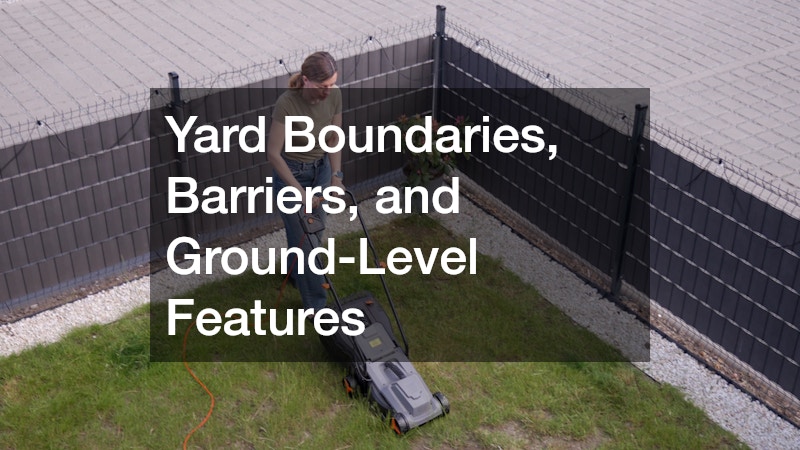
Fences, retaining walls, and property lines often get overlooked during a walkthrough, but they matter just as much as what’s inside the house. A quick check of fence posts for rot or leaning, along with a look at whether retaining walls show bulging or cracking, can flag problems that get expensive fast if left alone. It’s also worth confirming that the fence actually sits on the property line, since encroachment disputes with neighbors are more common than most buyers expect. Beyond boundaries, ground-level features like sheds, patios, and drainage swales deserve attention since standing water or uneven grading near the home can lead to foundation issues.
A good rule of thumb is that the ground should slope away from the foundation at least six inches over the first ten feet; anything flatter than that invites water to pool against the walls. Cracked or heaving patio slabs are another clue, often pointing to the same soil movement that could eventually affect the house itself. Anyone considering adding storage space down the road might also want to research a reliable storage shed builder ahead of time so they know what permits and site prep are required.
Many municipalities require permits for structures over 120 square feet, and setback rules can dictate how close a shed can sit to the property line or existing fence. Taking stock of these outdoor elements now saves headaches when planning future improvements, whether that means regrading a soggy corner of the yard or clearing space for a new outbuilding.
- Walk the entire perimeter to check for leaning, rot, or damaged sections in fences and walls, noting posts that wobble when pushed
- Test gate latches and hinges for proper function, checking for rust, sagging, or gaps that could let pets or kids through
- Confirm boundary lines match the official property survey, watching for encroachments from neighboring structures, trees, or sheds
- Check grading and drainage near outdoor structures, making sure soil slopes away from foundations at roughly a 6-inch drop over 10 feet
- Look for pooling water, soggy patches, or erosion channels after recent rain, especially near patios and driveways
- Inspect retaining walls for bulging, cracking, or missing weep holes that allow water to escape
- Examine walkways and steps for uneven settling or trip hazards where pavers have shifted
Interior Finishes and Move-In Readiness
While structural and mechanical systems matter most, an inspection should also account for interior finishes that affect livability from day one. Walls, flooring, and cabinetry should be checked for damage, and every window and door should open, close, and lock properly. Buyers moving from a previous residence should also think ahead about furnishing needs, since options like rent to own furniture can ease the transition when budgets are tight after closing costs.
Taking note of cosmetic issues now, even minor ones, gives buyers leverage in negotiations and helps homeowners plan a realistic renovation timeline. It also prevents the frustration of discovering a laundry list of small fixes only after the moving trucks have already left.
- Test every window and door for smooth operation and secure locking
- Check flooring for soft spots, gaps, or visible water damage
- Inspect cabinetry and countertops for structural soundness
- Note any cosmetic repairs needed before move-in
A truly thorough property inspection leaves no major system unchecked, from the roof and plumbing to the yard and outdoor structures surrounding the home. Understanding these categories in advance helps you ask sharper questions, budget realistically, and avoid unpleasant surprises after the deal is done. Whether you are buying your first home or maintaining a longtime property, taking the time to inspect every corner pays off in peace of mind and long-term savings. Use this checklist as a starting point for your next inspection and follow up with qualified professionals wherever concerns arise.